

If you earned your Commercial Pilot License (CPL) abroad, you need a DGCA-issued CPL before you can fly commercially in India. DGCA does not convert a foreign licence automatically. You must pass two DGCA written papers, hold a DGCA RTR(A), an Indian Class 1 medical and current flying experience, and complete skill tests in India, then apply on eGCA.
This guide explains each step using DGCA's own rules and circulars, with a link to each source so you can check it yourself. It was last checked against DGCA documents on 21 October 2026.
Foreign CPL Conversion at a Glance
| Item | What DGCA requires | Official source |
|---|---|---|
| Governing rules | CAR Section 7, Series G, Part I (Rev. 4, 9 Sep 2019) and FCL Circular 01 of 2012 (Rev. 1, 1 Jul 2019) | CAR (PDF), FCL 01/2012 (PDF) |
| DGCA written exams | Air Regulations + CPL Composite (Air Navigation and Aviation Meteorology) | CAR para 4.2.2 |
| Skill tests | In India, within 6 months before applying, on an India-registered aircraft | FCL 01/2012 |
| Radio licence | RTR(A) from DGCA (DGCA took this over from WPC on 1 Dec 2025) | CAR Series G Part VI (PDF) |
| Medical | Valid Indian Class 1 and valid foreign Class 1 | FCL 01/2012 |
| Where to apply | eGCA portal, with fees paid through Bharatkosh | DGCA Public Notice, 20 May 2020 (PDF) |
| Government fees | ₹2,500 per exam paper; ₹5,000 for issue of a licence or rating | Aircraft Rules, Rule 48 |
| DGCA processing target | 30 working days for CPL conversion (indicative) | MoCA statement, via Business Standard |
Both governing documents are still in force. DGCA's FCL Circular 01 of 2026 (PDF), dated 9 September 2026, lists FCL Circular 01 of 2012 (Rev. 1) as current, and DGCA's CAR index shows Series G Part I at Rev. 4 (2019).
Who Needs a DGCA License Conversion?
You need a conversion if you hold a CPL from any ICAO Contracting State (for example the USA (FAA), an EASA country, Canada, Australia, New Zealand or South Africa) and want to fly as a commercial pilot on Indian-registered aircraft.
The process is the same whichever country issued your licence, because DGCA applies one CAR to all Contracting States. Where your country makes a difference (the RTR exemption, instrument ratings and aircraft type), we explain it in "Does Your Licensing Country Matter?" below.
Foreign Aircrew Temporary Authorisation (FATA) is a separate scheme for validating a foreign licence for a limited period. It is governed by CAR Section 7, Series G, Part II and FCL Circular 04 of 2025. It does not give you an Indian CPL.
Eligibility Requirements
DGCA's conversion CAR says you must meet the same age, education, medical, experience and competency rules as any Indian CPL applicant (CAR para 4.1). Those rules are in Schedule II, Section J of the Aircraft Rules, 1937.
| Requirement | What you need |
|---|---|
| Age | At least 18 years on the date of application |
| Education | Class 12 (10+2) with Physics and Mathematics from a recognised board. You need Board Verification Certificates (BVC) for Class 10 and 12. If you studied under an international board, you also need an AIU equivalence certificate (Pariksha user manual (PDF)) |
| Medical | Valid Indian Class 1 medical on the date of application, plus a valid foreign Class 1 medical from the State that issued your licence |
| Foreign licence | A valid CPL from an ICAO Contracting State, with current ratings |
| English | Aviation English Language Proficiency (ELP). If your foreign licence shows an ELP level, DGCA endorses that level. If it only says "English Proficient", DGCA endorses Level 4. If you have no valid ELP, you must be tested in India (FCL 01/2012; CAR Series G Part III (PDF)) |
| Radio | A current Flight Radio Telephone Operator's Licence (FRTOL), which DGCA issues on the basis of your RTR(A) |
For more detail, see our guides to DGCA Class 1 medical certification and the English proficiency test for pilots.
Flying Hours You Must Show
These minimums come from Schedule II, Section J and the conversion checklist in FCL Circular 01 of 2012:
| Experience | Minimum |
|---|---|
| Total flight time | 200 hours |
| Pilot-in-Command (PIC) | 100 hours |
| PIC cross-country | 20 hours, including one PIC cross-country flight of at least 300 NM with full-stop landings at two different aerodromes (first leg beyond 100 NM from departure) |
| Instrument time | 10 hours (no more than 5 on an approved simulator) |
| PIC in the last 6 months | 15 hours |
| Night PIC in the last 6 months | 5 hours, including 10 take-offs and 10 landings |
If you also want an Instrument Rating (IR) on your Indian CPL: you need 50 hours of PIC cross-country, at least 5 hours of instrument time in the last 6 months, and an IR skill test in India within 6 months of applying. The total instrument-time figure is not the same in every DGCA document. Schedule II, Section L says 50 hours (up to 20 on a simulator), while FCL Circular 01 of 2012 says 40 hours (up to 20 on a simulator). Confirm the figure with your FTO before you apply.
If your licensing country required fewer hours than India: you can make up the difference in that country or in India (CAR para 4.1, Note).
Logbook rules matter too. DGCA accepts only the authenticated original logbooks used for your foreign licence, and the issuing State's authority must verify the entries. Time logged as a safety pilot or observer does not count as PIC for conversion. On single-crew aircraft, time counts as PIC only when you were the sole manipulator of the controls (FCL 01/2012, para 4 and Appendix I).
Your Foreign Rating Must Be "Current"
The rating on your foreign licence must be current for the aircraft type you are converting on. DGCA treats a rating as current if, in the 24 months before you apply, you have either:
- flown at least 10 hours as PIC on that type (50% of co-pilot or dual time can count towards this), or
- passed a flight review, check ride, flight test or skill test on that type.
This flying or check must have been done in the country that issued your licence. If your rating is not current, you must pass DGCA's Technical Specific exam on the type and complete endorsement training and skill tests in India before you apply (CAR paras 3.2–3.3).
DGCA Exams for Foreign CPL Conversion
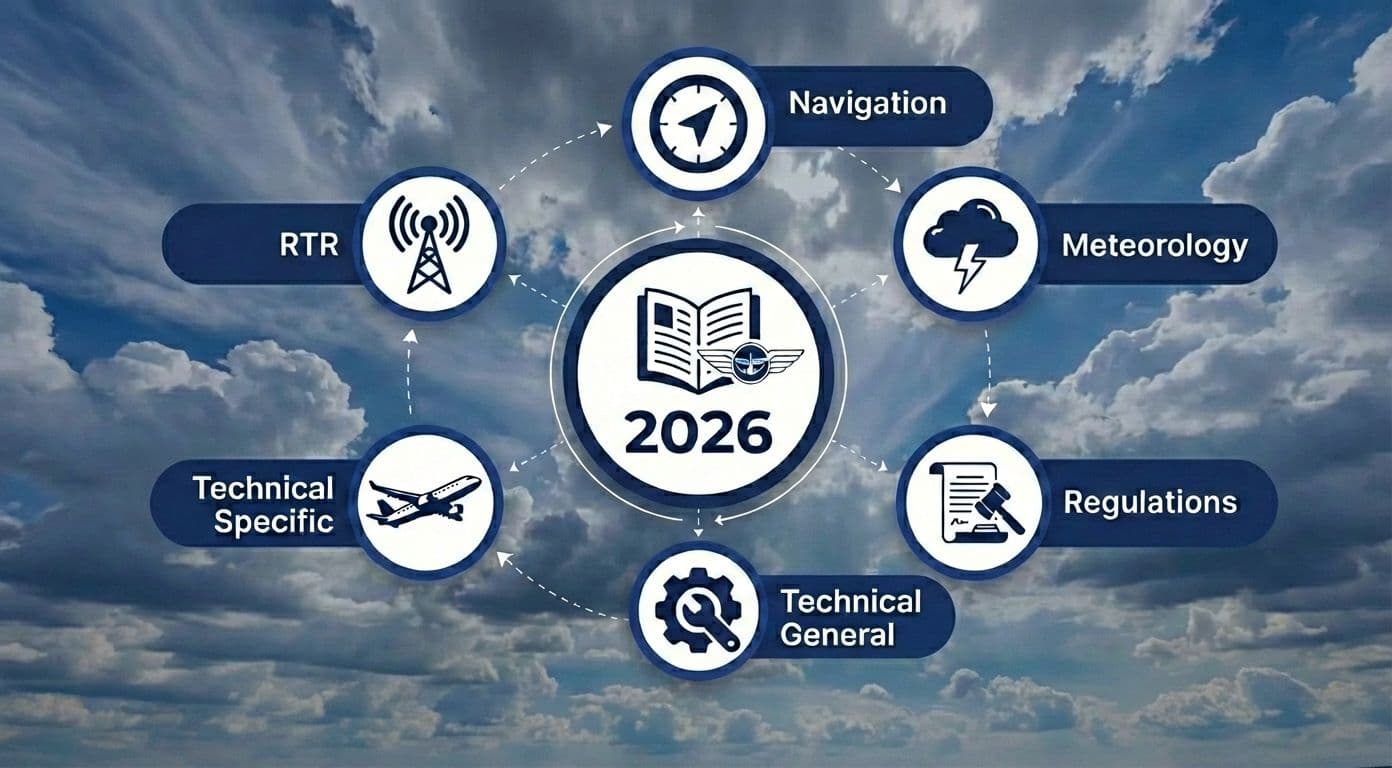
Under CAR para 4.2.2, foreign CPL holders write only two DGCA papers, conducted by DGCA's Central Examination Organisation (CEO):
- Air Regulations
- CPL Composite paper, covering Air Navigation and Aviation Meteorology. On the Pariksha portal this is the "CPLCG" category, which you unlock by adding your foreign licence to your profile.
Technical General is not on the list for CPL conversion. You need a Technical Specific (type) paper only if:
- your foreign rating is not current, or
- the aircraft you will fly your Indian skill tests on is not endorsed on your foreign licence (FCL 01/2012, para 6; FCL 02/2008 (PDF)).
Results stay valid for 60 months. Your Air Regulations and Composite passes must fall within the 60 months before your conversion application (FCL 01/2012, Appendix I(B)(3)).
Signals test. You must also pass a Signals (practical) test. If you did not take it at a training organisation approved by your licensing authority, an approved FTO in India must give you a signal reception test (CAR para 4.3.2; FCL 01/2012).
Note: Some training providers say DGCA also accepts separate passes in Air Navigation and Meteorology instead of the Composite paper. The CAR does not say this, so confirm it on eGCA or with DGCA before you plan around it.
Getting Your DGCA Computer Number
You need a DGCA computer number before you can book any exam. Apply on the Pariksha portal, choose the conversion category and upload a self-attested copy of your valid foreign licence. DGCA's user manual says the computer number is issued within 15 working days of a complete application. Foreign nationals and OCI/PIO card holders also need a security clearance (Pariksha user manual, Issue III (PDF)). Our step-by-step guide covers this in detail: How to Get a DGCA Computer Number.
How to Prepare
Air Regulations is specific to India, so plan to study it even if you have flown many hours abroad. These resources may help:
- DGCA Air Regulation previous-year papers (2026 guide)
- DGCA Navigation previous-year papers
- DGCA Meteorology previous-year papers
- DGCA exam schedule 2026: important dates
- How to clear DGCA exams on the first attempt
RTR(A) and FRTOL After the 2025 Changes
Many older conversion guides tell you to get your RTR from the WPC Wing of the Department of Telecommunications. That changed in late 2025.
- DGCA now runs RTR. DGCA took over Radio Telephone Operator (Restricted) examinations and certificate issue on 1 December 2025, under the Radio Telephone Operator (Restricted) Certificate and Licence Rules, 2025 and CAR Section 7, Series G, Part VI (PDF).
- The exam has two parts. The written exam has a 70% pass mark, and a pass stays valid for 3 years. The practical is a roughly 30-minute radiotelephony test in a simulated environment. You book practical slots on eGCA, and you need a DGCA computer number for both parts.
- Some foreign FRTOL holders can skip the written exam. If you hold a valid Flight Radio Telephone Operator's Licence (or equivalent) issued by a Commonwealth country or the Philippines, you can apply on eGCA for exemption from the written exam. The exemption is valid for 3 years, and you still take the practical (CAR Series G Part VI, para 5). FAA (USA) licence holders do not qualify for this exemption.
- Old WPC certificates have a cut-off. DGCA accepts WPC-issued RTR certificates only if they were issued or renewed on or before 15 July 2026 (DGCA Public Notice, 6 Jul 2026 (PDF)).
Once you hold your RTR, DGCA issues your FRTOL, which you must have for the CPL (CAR para 4.3.1). For more on the new exam format, read DGCA RTR(A) Exam: New Rules.
Step-by-Step: How to Convert a Foreign CPL to a DGCA CPL
Step 1: Prepare your records before you leave the foreign school
Get your logbook entries verified by the issuing authority. Collect statements for your cross-country, night and instrument time, plus your skill test reports. It is much harder to fix records after you return to India.
Step 2: Arrange verification of your foreign licence
DGCA accepts licence verification only from the State that issued your licence and will not process a conversion without it (FCL Circular 01 of 2007 (PDF)). DGCA may also check your documents directly with the foreign authority and your training school (CAR para 8).
Step 3: Get your Indian Class 1 medical
Indian Class 1 medicals are done at DGCA-empanelled IAF centres, private hospitals and examiners. You book through eGCA and pay through Bharatkosh. For initial examinations, IAF Boarding Centres charge CGHS rates (FCL Circular 03 of 2025 (PDF)). A Class 1 assessment for CPL holders is valid for 12 months (Rule 39C).
Step 4: Get your computer number and pass the two DGCA papers
Register on Pariksha, then pass Air Regulations and the CPL Composite, plus Technical Specific if it applies to you.
Step 5: Get your RTR(A), or an RTR exemption, and your FRTOL
Apply through DGCA as explained in the RTR section above.
Step 6: Confirm your English Language Proficiency
Check which ELP level your foreign licence shows. If you have no valid ELP, take the test in India with a DGCA-approved provider.
Step 7: Complete conversion flying and skill tests in India
All conversion applicants must take skill tests in India on at least one aircraft type that will be endorsed on the Indian licence. That aircraft must be on the Indian register with a valid Certificate of Airworthiness (FCL 01/2012, paras 2 and 5). You must complete these tests at an approved flying training institute within the 6 months before you apply:
- General flying test by day
- General flying test by night
- Day cross-country test of at least 250 NM, with a full-stop landing at another aerodrome
- Night cross-country test of at least 120 NM, returning to the departure aerodrome without landing elsewhere
- Instrument Rating test (if you want IR). If your licensing country did not issue you an IR, DGCA will not recognise an IR skill test taken there, so you must take it in India.
Test reports must be on DGCA's prescribed format (FCL 02/2008). Choose a DGCA-approved FTO. Our list of DGCA-approved flying schools in India is a good starting point.
Step 8: Apply on eGCA
Conversion of CPL (Aeroplanes and Helicopters) has been an eGCA service since May 2020 (DGCA Public Notice, 20 May 2020). Log in to eGCA from the DGCA website, apply, pay the fee through Bharatkosh and note your Tracking ID. DGCA treats the date your Tracking ID is issued as your application date (FCL Circular 02 of 2019). DGCA may ask to see original documents.
Step 9: DGCA scrutiny and licence issue
If your file is incomplete, DGCA returns it with the reasons. You must then meet all requirements, including recency, on the date you resubmit (FCL 01/2012, Appendix flowchart).
Documents Checklist
Based on DGCA's eGCA public notice and FCL Circular 01 of 2012, keep these ready:
- Valid foreign CPL and valid foreign Class 1 medical
- Verification of your foreign licence, sent by the issuing authority
- Authenticated original logbook(s)
- Statements of PIC cross-country time (including the 300 NM flight), night flying and instrument time
- Skill test reports from India (not needed separately for tests done at an Indian FTO)
- Valid Indian Class 1 medical assessment
- DGCA exam results (Air Regulations and CPL Composite, plus Technical Specific if required)
- RTR(A) certificate, or DGCA exemption plus practical pass, and your FRTOL
- Class 10 and 12 Board Verification Certificates (Physics and Maths), plus AIU equivalence if applicable
- ID and address proof, and photographs as specified on eGCA
Cost of DGCA License Conversion in 2026
The government fees are small. Conversion flying in India is the main cost.
| Item | Fee | Source |
|---|---|---|
| DGCA exam, online regular session | ₹2,500 per paper (₹5,000 for Air Regulations + Composite) | Rule 48(1)(ix) |
| DGCA exam, online on-demand (OLODE) | ₹5,000 per paper | Rule 48(1)(x) |
| Technical Specific paper (only if required) | ₹2,500 per paper | Rule 48(1)(ix) |
| Issue of a licence or rating | ₹5,000 | Rule 48(1)(iv) |
| DGCA (government) examiner on board a flying test, only if one is used | ₹5,000 single-engine; ₹10,000 multi-engine under 5,700 kg | Rule 48(2) |
| Aircraft or simulator for flying tests | Paid by the candidate | Rule 48(2) |
| RTR(A) written and practical | As notified under Rule 9 of the RTR Rules, 2025 (shown on Pariksha/eGCA when you pay) | CAR Series G Part VI, para 4 |
| Indian Class 1 medical | CGHS rates at IAF Boarding Centres, plus any lab tests | FCL 03/2025 |
Conversion flying (set by each FTO, not by DGCA): prices vary with the aircraft, whether you need IR, and how many hours you need to become current. As one published example, Flightrule Aviation lists ₹4,50,000 plus 18% GST for about 10 hours of flying (including IR checks), with accommodation, over about 16 days (checked October 2026). Always get a written, itemised quote.
So, beyond flying, the official DGCA fees start at about ₹10,000: two exam papers in a regular session plus the licence issue fee. RTR and medical costs come on top. For the full cost of becoming a pilot in India, see our pilot training cost breakdown.
How Long Does Foreign CPL Conversion Take?
| Stage | Official timeframe or rule |
|---|---|
| DGCA computer number | Within 15 working days of a complete application (Pariksha manual) |
| DGCA written exams | Regular sessions published by DGCA, or on-demand (OLODE) sessions (exam schedule) |
| RTR(A) practical | You choose a slot on eGCA; the admit card is issued 3 days before |
| Conversion flying | Usually a few weeks, depending on the FTO and weather (one FTO publishes about 16 days) |
| DGCA processing | Indicative 30 working days for CPL conversion (2023 average: 31 working days) (MoCA via Business Standard) |
Plan around these deadlines:
- Skill tests and recency (15 hours PIC and 5 hours night) must fall within 6 months of your application.
- Exam passes must fall within 60 months.
- Your foreign rating must have been current within 24 months.
If your documents are in order, 3 to 6 months is a realistic plan. This is our estimate, not a DGCA figure. Delays usually come from licence verification, exam session dates and flying slots.
Common Reasons Applications Get Delayed or Returned
- Verification not from the issuing State. DGCA accepts only the issuing authority's verification (FCL 01/2007).
- Logbook problems. Entries are not authenticated, or safety-pilot time is logged as PIC.
- Recency has lapsed. Skill tests or the 15 hours of PIC fall outside the 6-month window.
- Wrong aircraft or wrong format. Flying tests were done on an aircraft not registered in India, or not on DGCA's format (FCL 02/2008).
- Expired exam results. Results are more than 60 months old.
- Missing education proof. BVCs or AIU equivalence are missing.
- Invalid RTR. A WPC RTR issued after 15 July 2026, or no RTR from DGCA.
- False documents. DGCA can cancel a licence obtained on false information and take legal action (CAR para 9).
Does Your Licensing Country Matter?
Whether you trained under the FAA, EASA, Transport Canada, CASA, SACAA or CAA New Zealand, the same DGCA CAR applies. Three practical differences remain:
- RTR written exemption. Only FRTOLs issued by Commonwealth countries or the Philippines qualify. FAA licence holders take both RTR parts.
- Instrument Rating. If your licensing country did not issue you an IR, a skill test taken there will not count. You will take the IR test in India.
- Aircraft type. Your Indian skill tests must be on a type that is on the Indian register. If that type is not endorsed on your foreign licence, you will also need DGCA's exam, training and skill tests for it.
Before you choose a school abroad, read DGCA's caution to students in our article on the DGCA advisory for students going abroad for pilot training.
Tips If You Are Still Training Abroad
- Log flights exactly as DGCA needs them: PIC, cross-country (including one 300 NM flight with two full-stop landings), night and instrument time, each shown separately.
- Keep flying until you return so you can meet the 15 hours of PIC within 6 months.
- Get an IR from your training country if you can.
- Start your computer number application and Air Regulations preparation early, so the exams do not hold you back once you are home.
After conversion, most pilots move on to airline selection and a type rating. Our guides on pilot salary in India and cadet pilot programmes cover what comes next.
Preparing for Air Regulations and the CPL Composite? Explore Apano's DGCA ground classes or talk to our counsellors.
Official Sources
All documents were checked on 21 October 2026. DGCA PDF links download the file directly.
- CAR Section 7, Series G, Part I: Issue of Indian licences to holders of foreign licences (Rev. 4, 9 Sep 2019) (PDF)
- FCL Circular 01 of 2012, Rev. 1: Demonstration of competency for conversion of foreign CPL (PDF)
- FCL Circular 01 of 2026: List of current Flight Crew Licensing Circulars (PDF)
- FCL Circular 01 of 2007: Verification of foreign licences (PDF)
- FCL Circular 02 of 2008: Flight tests for conversion (PDF)
- FCL Circular 02 of 2019: eGCA application procedure (PDF)
- Aircraft Rules 1937, Schedule II, Section J: CPL (Aeroplanes)
- Aircraft Rules 1937, Schedule II, Section L: CPL with Instrument Rating
- Aircraft Rules 1937, Rule 48: Fees
- Aircraft Rules 1937, Rule 39C: Validity of medicals and licences
- CAR Section 7, Series G, Part VI: RTR(A) examination and issue (effective 1 Dec 2025) (PDF)
- CAR Section 7, Series G, Part III: Aviation English Language Proficiency (PDF)
- DGCA Public Notice, 6 Jul 2026: Acceptance of WPC-issued RTR (PDF)
- DGCA Public Notice, 20 May 2020: CPL conversion on eGCA (PDF)
- FCL Circular 03 of 2025: Class 1 medical examinations (PDF)
- DGCA Pariksha user manual, Issue III (Oct 2024)
Disclaimer: This guide summarises DGCA rules for general information. DGCA updates rules, fees and procedures from time to time, so confirm the current requirements on eGCA or with DGCA before you pay fees or book flying.