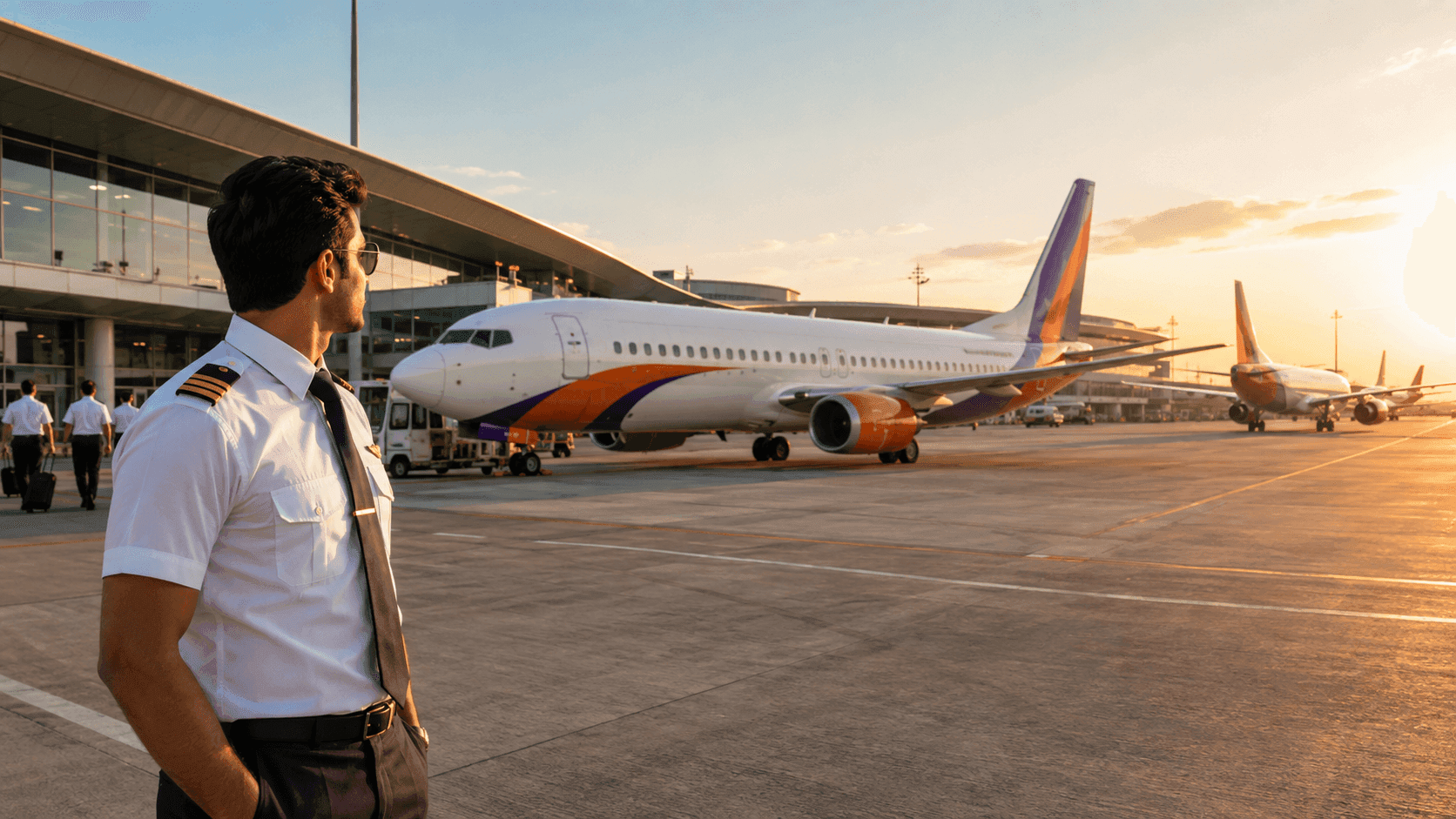


1. Why Akasa Air Is Ramping Up Pilot Hiring Now
From Hiring Freeze to Aggressive Expansion
For anyone tracking Akasa Air careers, the period from mid-2024 through most of 2025 was frustrating. The airline paused pilot recruitment for roughly a year and a half after Boeing's well-documented production slowdown disrupted aircraft delivery schedules across the globe. With fewer planes arriving than planned, Akasa had no immediate need for additional cockpit crew on its payroll.
That pause is now behind it. Akasa Air resumed active pilot hiring in early 2026, with CEO Vinay Dube confirming the airline is financially sound and running roughly 750 pilots against a fleet of around 33–34 aircraft — a ratio he has described as strong by industry standards. That number will need to grow substantially to support the fleet expansion ahead.
| Metric | Figure (early–mid 2026) |
|---|---|
| Active pilots | ~750 |
| Current fleet size | ~33–38 Boeing 737 MAX aircraft |
| International ASK share | Rising from ~18% toward a targeted ~40% |
| Hiring status | Resumed, after an ~18-month pause |
Boeing Delivery Delays: The Pause Explained
Boeing's manufacturing challenges created a ripple effect for airlines that had ordered the 737 MAX family. Akasa Air, which operates an all-Boeing 737 MAX fleet, found its induction pipeline stalled. Bringing pilots through type-rating training and line checks is expensive, and without confirmed delivery dates it made little financial sense to accelerate hiring.
Hiring pilots ahead of aircraft is a costly bet — but hiring too late risks grounding newly delivered planes for want of crew. The freeze was a pragmatic, short-term decision rather than a sign of financial trouble. As Boeing's production line has stabilised, Akasa has moved to rebuild its recruitment momentum.
What Resuming Recruitment Signals About Fleet Growth
Resumed hiring is one of the clearest indicators that Akasa Air expects to induct aircraft at pace. The airline has historically targeted a cadence of roughly a dozen or more aircraft per year — a rate that demands a steady pipeline of qualified captains and first officers. Each new aircraft typically requires several additional pilots to maintain regulatory crew ratios and cover leave, training, and standby rosters.
A few key points worth keeping in mind:
- Pilot hiring paused for about a year and a half due to Boeing production delays affecting 737 MAX deliveries.
- The airline's active pilot count sits at roughly 750 as of early 2026.
- Resumed recruitment reflects renewed confidence in confirmed aircraft delivery timelines.
- A sustained pace of a dozen-plus new aircraft per year is a primary driver behind the hiring push.
For pilots evaluating Akasa Air careers, this context matters. The airline is not hiring speculatively — aircraft are on their way, routes are expanding, and seat capacity is set to grow over the next two to three years.
Need personalised guidance before you apply? Book a free consultation with our aviation experts for personalized guidance. 👉 Get Free Career Consultation
📖 Understand the full journey from student pilot to airline cockpit. Career Roadmap for the Aspiring Commercial Pilot
2. The Scale of Akasa Air's Pilot Recruitment Plan
500+ Pilots Over Three Years: Breaking Down the Numbers
For pilots exploring a career with Akasa Air, the scale of the airline's recruitment drive is difficult to overlook. The carrier has been reported to be targeting more than 500 pilots across a three-year hiring cycle, placing it among the more ambitious hiring programmes in Indian aviation — alongside similarly large pushes at Air India and Air India Express. This figure is tied to specific fleet expansion milestones and route network targets the airline is actively pursuing, rather than being a speculative round number.
Annual Fleet Induction Targets and Crew Ratio Requirements
The recruitment numbers are driven, above all, by fleet growth. Every new aircraft demands a corresponding increase in qualified crew. Regulatory crew ratio requirements mean each additional plane calls for multiple captain and first officer pairs to cover rotations, standby duties, and training cycles. Sustained induction at this scale compounds into hundreds of cockpit vacancies across the planning horizon.
Three factors sit at the heart of this demand:
- Fleet inductions: A cadence of roughly a dozen or more aircraft added annually, each requiring dedicated crew pools.
- Crew ratios: Regulatory and operational requirements ensure each aircraft needs multiple pilot pairs, amplifying total headcount demand.
- Training pipeline: Ongoing type-rating and line-training cycles mean recruitment must stay well ahead of actual fleet delivery dates.
How International Growth Is Reshaping Staffing Needs
Perhaps the most consequential variable in Akasa's staffing equation is its international ambition. CEO Vinay Dube has said the airline's international available seat kilometers (ASKs) — a measure of international capacity, not simply route count — are set to rise from around 18% toward approximately 40% over the next few years, with a meaningful jump expected in the near term.
International flying introduces complexity beyond adding seats. Pilots operating on these routes must hold additional type ratings, satisfy foreign regulatory approvals, and maintain currency on longer-haul procedures. This raises the experience threshold and extends the time needed to bring new hires to full operational readiness.
The airline cannot simply recruit on volume alone. It needs pilots with the right qualifications and experience levels to satisfy both Indian and overseas regulatory bodies. Taken together, fleet growth and international expansion are what push the total pilot requirement into the hundreds — and make a multi-year hiring runway both ambitious and necessary.
📖 Important guidance before choosing an overseas flight training program. DGCA Advisory for Students Going Abroad for Pilot Training
3. Types of Pilot Roles and Profiles Akasa Air Is Looking For
Captain vs. First Officer Openings: What to Expect
A closer look at Akasa Air careers shows that the airline recruits across both Captain and First Officer positions, covering domestic operations and a growing set of international routes.
Captains are expected to bring strong command experience, a demonstrated safety record, and the ability to guide junior crew members. First Officer roles serve as an entry point for qualified pilots seeking to build flight hours and grow within a rapidly expanding carrier.
Experience and Licence Requirements for Each Role
Whichever position you are targeting, a DGCA-issued CPL or ATPL is the non-negotiable baseline. Beyond the licence itself:
- CPL holders applying for First Officer roles must meet the minimum total flight hours prescribed under DGCA regulations.
- ATPL holders are generally preferred for Captain openings, with substantial Pilot-in-Command hours serving as a key differentiator.
- A valid Boeing 737 MAX type rating is a significant advantage, given that the 737 MAX forms Akasa's entire fleet.
- A current Class 1 medical certificate issued by a DGCA-approved authority is mandatory for all applicants.
If you do not yet hold a 737 MAX type rating, prior narrow-body jet experience combined with a strong simulator assessment record can still keep your application competitive.
International Route Positions: Additional Qualifications Needed
As Akasa expands beyond Indian borders, international flying roles are appearing more often in its pilot hiring pipeline. These positions generally carry a higher threshold than domestic counterparts:
- Higher total flight hours are typically required.
- Specific international route endorsements and familiarity with ICAO procedures are expected.
- ETOPS familiarity and experience operating into international airports can strengthen a candidate's profile considerably.
Not sure which aviation path fits your profile? Book a free consultation with our aviation experts for personalized guidance. 👉 Get Free Career Consultation
📖 Know exactly what topics and subjects the licensing exam covers. DGCA CPL Exam Pattern & Syllabus 2026
4. Recent Challenges: What Applicants Should Know
A balanced look at Akasa Air careers should include recent friction alongside the growth story — this context doesn't change the hiring opportunity, but it's relevant to anyone evaluating the airline.
In September 2025, Akasa lost roughly a tenth of its then-450 pilots, who resigned without serving their contractual notice periods, with several joining Air India Express amid a broader industry-wide pilot shortage. Akasa pursued legal action against the departing pilots and the aviation regulator, and its counsel told a Delhi court the airline faced a "crisis" that could force flight cancellations — ultimately cancelling around 600 flights that August. The airline has since said the issue is "now behind us" and confirmed it is back in growth mode.
Separately, Akasa came under regulatory scrutiny on training standards: the DGCA imposed a ₹30 lakh fine in October 2025 over crew training lapses, and in December 2025 suspended the airline's Director of Operations and Director of Training for six months over related issues. A section of Akasa pilots also wrote to the Ministry of Civil Aviation seeking a probe into the airline's hiring and rostering practices.
None of this has derailed Akasa's expansion plans — deliveries and hiring have continued into 2026 — but applicants should go in with full visibility into the airline's recent operational and regulatory history, not just its growth targets.
5. How Akasa Air Careers Compare to Other Indian Airline Hiring Pipelines
Akasa vs. Established Carriers: Growth Trajectory and Job Security
When comparing Akasa Air careers against opportunities at legacy carriers like Air India or IndiGo, the most striking difference is the pace of expansion. Established airlines carry brand recognition and a longer track record, but their seniority-heavy structures often mean slower progression for those looking to move up. Akasa's rapid fleet ramp-up compresses those timelines considerably, giving ambitious pilots a realistic path to senior roles in fewer years — though the 2025 attrition episode above is a reminder that rapid growth also brings retention and rostering growing pains.
Salary Benchmarks and Career Progression at a Fast-Growing LCC
As a low-cost carrier, Akasa operates lean — but lean does not mean underpaid. The modern Boeing 737 MAX fleet reduces maintenance costs and positions the airline to offer competitive type-rated packages. Pilots transitioning from older narrowbody fleets can benefit from the efficiency premium the MAX carries in the market.
| Role | Experience | Akasa Air — Approx. Annual (2026) |
|---|---|---|
| First Officer | 1–3 years | ₹22–42 lakh |
| Captain (Domestic) | 6–10 years | ₹60 lakh – ₹1.1 crore |
Figures are indicative gross CTC estimates; confirm current numbers directly with Akasa during the offer stage.
- Command upgrade potential is accelerated by rapid fleet expansion, unlike legacy carriers with frozen seniority lists.
- Compensation is benchmarked against the LCC sector, with a 737 MAX type rating adding meaningful market value.
- Growing international routes bring additional allowances and long-term earning depth as the network matures.
Key Differentiators: Culture, Fleet Modernity, and Route Network Growth
Beyond pay, culture is a genuine differentiator. Akasa has built itself around merit-based advancement rather than years-of-service seniority alone.
The all-737 MAX fleet means crews train on a single, modern aircraft type, simplifying recurrent training and removing the complexity of mixed-fleet operations.
The expanding international network matters for long-term career depth too. As Akasa adds overseas destinations, roles in international operations, network planning, and regulatory compliance will grow — broadening Akasa Air careers well beyond the cockpit.
6. Action Steps: How to Position Yourself for Akasa Air Pilot Vacancies
Where to Find and Track Official Akasa Air Career Listings
The most reliable way to pursue Akasa Air careers is to monitor the airline's official careers page directly. Third-party aviation job portals often mirror live postings, but the source of record remains Akasa Air's own site. Set up alerts on at least two platforms so you're notified the moment a vacancy goes live.
- Akasa Air's official careers portal — bookmark and check weekly.
- Aviation-specific job portals for aggregated listings.
- LinkedIn and professional pilot forums for informal leads.
(Note: Akasa also hires regularly for cabin crew, ground staff, and customer service roles — if you're exploring non-cockpit paths, check the same official portal above.)
Documents, Ratings, and Records to Prepare Before Applying
- DGCA medical certificate — confirm Class 1 validity and renewal dates.
- ATPL or CPL licence — verify ratings, endorsements, and expiry.
- Logbook records — total hours, PIC hours, and type-specific hours accurately tallied and verified.
- Previous employment records and reference contacts from past operators.
Caution: An expired medical or an unverified logbook entry can stall your application at the background-check stage, even after a successful simulator assessment.
Timeline Expectations: From Application to Line Flying
- Application submission and initial document screening.
- Simulator assessment and technical evaluation.
- HR interview and background verification.
- Conditional or firm offer, followed by type-rating training.
- Line flying commencement, often aligned with fleet delivery milestones.
Onboarding timelines may be tied to aircraft delivery schedules. A conditional offer does not always mean an immediate start date — batches of new pilots are often activated as each new aircraft enters service.
Ready to take the next step in your aviation journey? Book a free consultation with our aviation experts for personalized guidance. 👉 Get Free Career Consultation