

1. What Happened: DGCA's Action Against Redbird Flight Training Academy Private Limited
The July 16 Order Explained
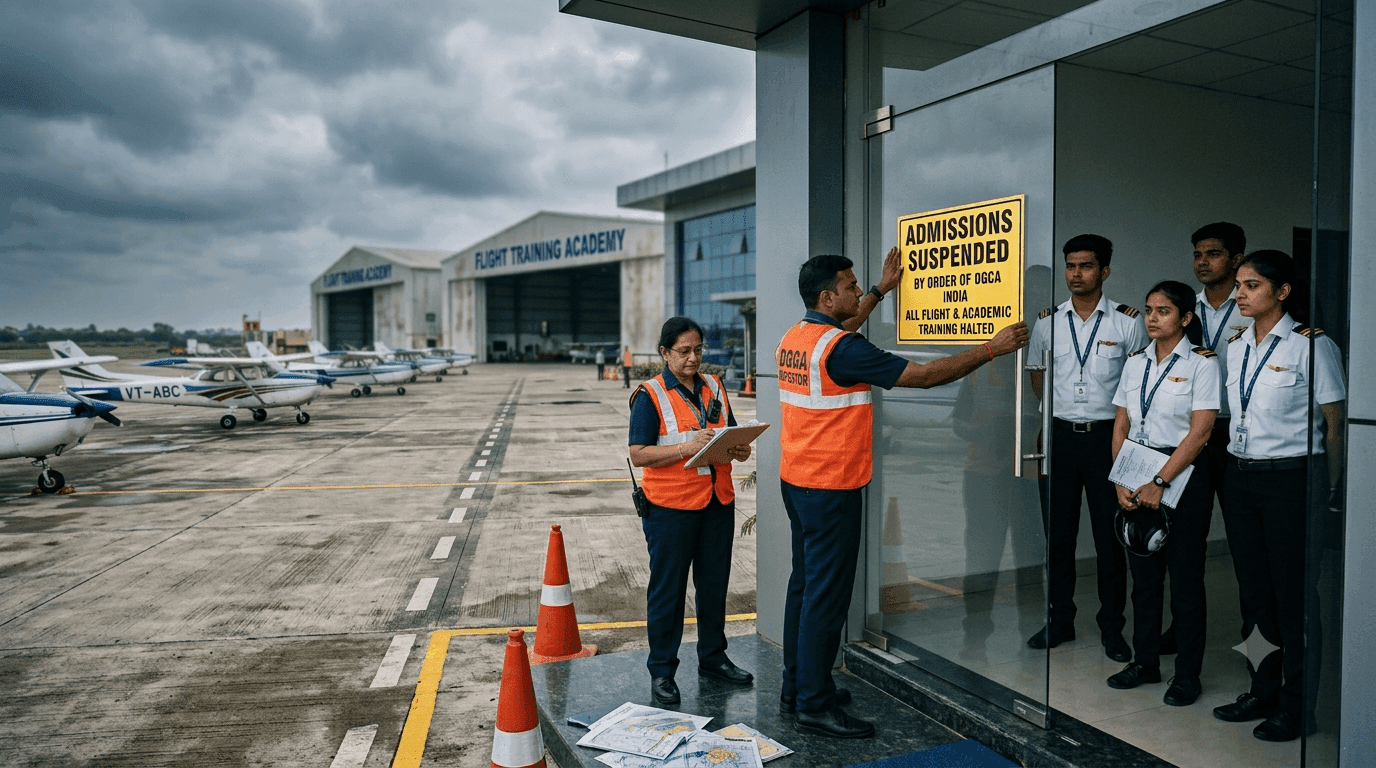
On July 16, India's civil aviation regulator issued a sweeping directive against Redbird Flight Training Academy Private Limited, barring the organisation from enrolling any new students until August 31, 2027. The order came just eight days after a DGCA spot inspection on July 8 uncovered multiple discrepancies across the academy's facilities.
For the hundreds of aspiring aviators pursuing a flight training commercial pilot licence at the school, the directive raises serious questions about continuity of training. At the time of the order, the academy had 435 active and 92 inactive trainee pilots spread across five bases in India. The admission freeze does not immediately ground existing students, but it signals deep regulatory concern about how the organisation is being run.
Five Reasons Behind the Ban
The July 16 order cited five specific violations that the DGCA determined warranted immediate action:
Prolonged training delays — students were unable to complete their programmes within reasonable or contracted timelines.
Unilateral fee hikes — the academy increased flying charges to Rs 3,000 per flying hour without proper authorisation or student consent.
Non-compliance with flight duty time limitations, a core area of concern under DGCA rules for pilot safety management.
Discrepancies in maintenance and operational records uncovered during the July 8 spot inspection.
Inadequate infrastructure and resource availability relative to the size of the enrolled student cohort.
Unilateral fee increases and chronic training delays are not administrative oversights. They directly affect a trainee pilot's financial planning and career timeline.
A Pattern of Violations: The 2023 Suspension and Now
The July 2025 action is not the first time regulators have stepped in. In October 2023, DGCA handed Redbird Flight Training Academy Private Limited a two-month suspension — a significant penalty that should, in principle, have prompted comprehensive internal reforms.
The fact that a second, far longer ban has now followed suggests those corrective measures either fell short or were not sustained. For students already enrolled, and for the broader ecosystem of flight duty time limitations and DGCA enforcement, this pattern underlines why the regulator is tightening oversight across all approved flight training organisations in India.
Need personalised guidance before you apply?
Book a free consultation with our aviation experts for personalized guidance.
👉 Get Free Career Consultation
📖 Explore structured cadet pathways offered by India's leading commercial airlines. Cadet Pilot Program in India 2026: IndiGo, Air India & Akasa
2. How This Affects Trainee Pilots and Flight Training Commercial Pilot Licence Aspirants
Impact on Current Students Enrolled at Redbird
Trainee pilots already enrolled at Redbird Flight Training Academy Private Limited are now facing considerable uncertainty. With operations disrupted following the DGCA suspension, students who were midway through their flight training commercial pilot licence programmes are experiencing prolonged delays that directly affect their ability to accumulate the required flying hours and meet regulatory milestones on time.
These delays are not simply administrative inconveniences. Every grounded week pushes back medical validations, simulator assessments, and the structured progression required under current flight duty time limitations and DGCA guidelines — creating a cascading effect on career timelines that is difficult to recover from.
Fee Disputes, Refund Failures, and Denied Facility Access
Accounts from affected trainees point to a troubling pattern of financial grievances. Several students who declined to accept revised fee structures reportedly had their access to training facilities denied entirely, bringing their progress to a halt.
Refunds offered to departing students were described as inadequate and disproportionate relative to the fees already paid. Those who refused the revised terms were denied continued access to aircraft and ground facilities. Many now find themselves in a position of financial uncertainty with limited legal recourse clearly available to them.
A training organisation withholding facility access as leverage in a fee dispute is precisely the kind of conduct that DGCA's oversight mechanisms are designed to prevent.
What DGCA New Rules for Pilots Mean for Training Accountability
The regulatory action against Redbird Flight Training Academy Private Limited signals a broader shift in how the DGCA intends to enforce standards across approved training organisations. Under DGCA new rules for pilots, accountability now extends to financial conduct, student welfare, and operational transparency — not only airworthiness and flight hours.
For aspirants planning to pursue a commercial pilot licence, this episode carries a clear practical lesson. Before committing substantial fees to any flight academy, prospective students should take the following steps:
- Verify the institution's current DGCA compliance status and approval validity.
- Review refund policies and fee revision clauses in enrolment agreements carefully.
- Check for any active DGCA notices or suspension orders against the academy before making any payment.
Not sure which aviation path fits your profile?
Book a free consultation with our aviation experts for personalized guidance.
👉 Get Free Career Consultation
📖 Understand official DGCA warnings before enrolling in any flight training program. DGCA Advisory for Students Going Abroad for Pilot Training
3. What to Check Before Enrolling in Any DGCA-Approved Flight Academy
Choosing the right academy for your commercial pilot licence training is one of the most consequential decisions you will make — financially and professionally. The scrutiny surrounding Redbird Flight Training Academy Private Limited has made it clear how essential thorough due diligence is before signing any agreement or paying any fees.
Key Red Flags to Watch for in a Flight Training Agreement
Training agreements can contain clauses that expose students to serious financial risk. Before you sign, read every clause carefully and watch for the following warning signs.
Unilateral fee revision clauses — provisions that allow the academy to increase fees mid-programme without student consent — were a pattern highlighted in the Redbird case. Vague or absent refund policies are equally concerning; always confirm refund terms in writing and cross-check them against DGCA consumer protection guidelines. The absence of a clearly stated grievance redressal mechanism or arbitration clause is another cause for concern.
A training contract that favours the academy on fees while offering the student no exit protection is not a contract worth signing. It is a liability.
Understanding Flight Duty Time Limitations and Training Timelines
DGCA prescribes specific flight duty time limitations that govern how many hours a trainee can fly within a given period. If an academy's advertised schedule appears to compress the required hours into an unrealistically short window, that is a compliance concern worth raising.
Under DGCA rules for pilot training, academies must structure their programmes to respect these limits. Ask the admissions team to walk you through the month-by-month flying schedule and verify that it is achievable within regulatory boundaries.
A Pre-Enrolment Checklist for Pilot Trainees
Before committing to any DGCA-approved flight academy, work through the following steps.
Verify that the academy holds a current, unsuspended DGCA approval — do not rely solely on the academy's own claims. Check the DGCA public register directly. Search public records for any incident history, enforcement actions, or prior suspensions linked to the academy. Request the full training agreement in advance and have it reviewed before paying any enrolment fee. Confirm the refund policy in writing, including the conditions for partial refunds if the programme is interrupted. Finally, assess whether the proposed training timeline is consistent with DGCA flight duty time limitations and the minimum hours required for a commercial pilot licence.
Taking these steps before enrolment significantly reduces the risk of the financial and regulatory difficulties that have affected students at several Indian flight academies in recent years.
Ready to take the next step in your aviation journey?
Book a free consultation with our aviation experts for personalized guidance.
👉 Get Free Career Consultation
📖 Know exactly what the CPL exam covers before starting your training journey. DGCA CPL Exam Pattern & Syllabus 2026