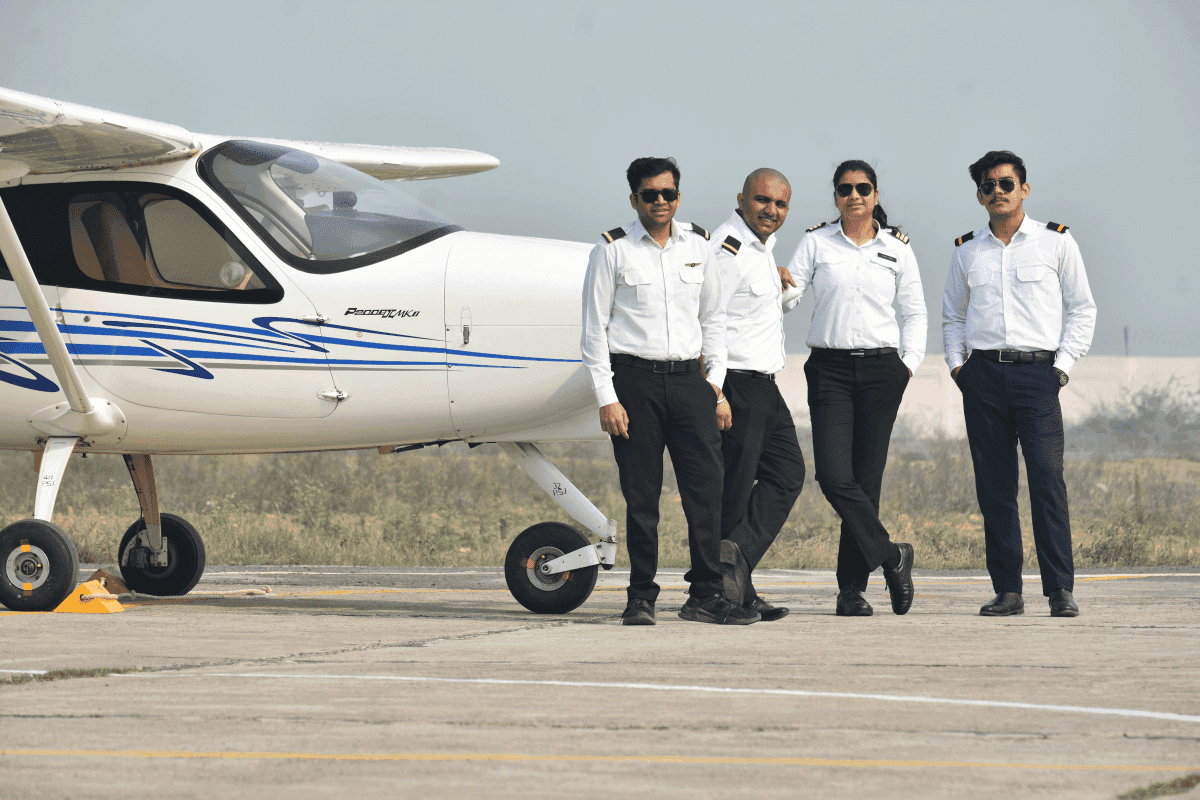


India's skies are getting busier — and so are its cockpits. According to data tabled in Parliament, Directorate General of Civil Aviation (DGCA)-approved Flying Training Organisations (FTOs) issued 2,309 Student Pilot Licences (SPLs) in 2025 — sustaining the remarkable momentum built over the last five years of India's aviation training boom.
The data was shared by Minister of State for Civil Aviation, Murlidhar Mohol, in a written reply in the Lok Sabha in April 2026.
Five Years of Steady Growth
India's pilot training sector has shown consistent momentum over the last half-decade. A total of 9,609 SPLs were issued across five years, with output more than doubling since 2021:
| Year | SPLs Issued |
|---|---|
| 2021 | 1,173 |
| 2022 | 1,675 |
| 2023 | 2,088 |
| 2024 | 2,364 (All-time high) |
| 2025 | 2,309 |
From 1,173 in 2021 to 2,309 in 2025 — India's flying schools have nearly doubled their annual output in just four years.
India's FTO Network: 41 Schools, 63 Flying Bases
India currently has 41 DGCA-approved FTOs operating across 63 flying bases nationwide. This distributed infrastructure allows aspiring pilots from across the country to begin their ab-initio (foundational) training close to home.
A Student Pilot Licence (SPL) is the mandatory first step for any aviation aspirant. Before a student can log a single hour of actual flight time at an FTO, they must first secure their SPL — making these numbers a direct indicator of how many new students are entering the pilot pipeline each year.
For students who prefer international training routes, the DGCA issued 615 Commercial Pilot Licences (CPLs) in FY 2025 to cadets who completed their training at foreign FTOs.
DGCA's New Ranking Framework for Flying Schools
The record numbers come alongside a renewed push for quality. The DGCA has implemented a ranking framework for FTOs, effective from October 1, 2024, designed to make flying school selection more transparent for students.
Here's how it works:
- Category A & B: Schools that meet or exceed safety and training benchmarks
- Category C: Schools scoring below 50% — these receive formal notices from the DGCA and must submit improvement plans
- Rankings are published bi-annually
Beyond rankings, the DGCA also conducts annual surveillance, safety audits, regulatory audits, and surprise spot checks at FTOs. Flying schools are also required to publish key details on their own websites — including aircraft fleet information, instructor qualifications, fee structures, and financial assistance options.
This transparency is a significant win for students who previously had to rely on word-of-mouth when evaluating flying schools.
What This Means for Aspiring Pilots in India
India is on track to become the third-largest aviation market in the world. Indian carriers have placed massive aircraft orders, and the demand for trained pilots will only grow. The surge in SPL issuance is a direct response to this demand — and a sign that India is building the pilot workforce of the future domestically.
For students considering a career in aviation, the data is encouraging:
- More DGCA-approved flying schools than ever before
- Stronger regulatory oversight means better quality training
- A clear career pathway from SPL → CPL → Airline career
Start Your Pilot Journey — Get Free Expert Guidance
Choosing the right Flying Training Organisation (FTO) is one of the most important decisions in your aviation career. With 41 DGCA-approved options across India, it can feel overwhelming.
Talk to our aviation experts — for free. Whether you have questions about SPL eligibility, FTO selection, DGCA requirements, or CPL ground classes, we're here to help you navigate your path to the cockpit.
👉 Book a Free Consultation with Apano Aviation Experts
Related Articles
- How to Become a Pilot in India – Complete 2026 Guide
- DGCA CPL Exam Pattern & Syllabus 2026
- Which DGCA Exam Should You Give First?
- Pilot Salary in India 2026 – What Can You Expect?
Source: PTI / Ministry of Civil Aviation — Written reply by Minister of State Murlidhar Mohol in Lok Sabha, April 2, 2026.